 Concrete Calculator Fieldnotes
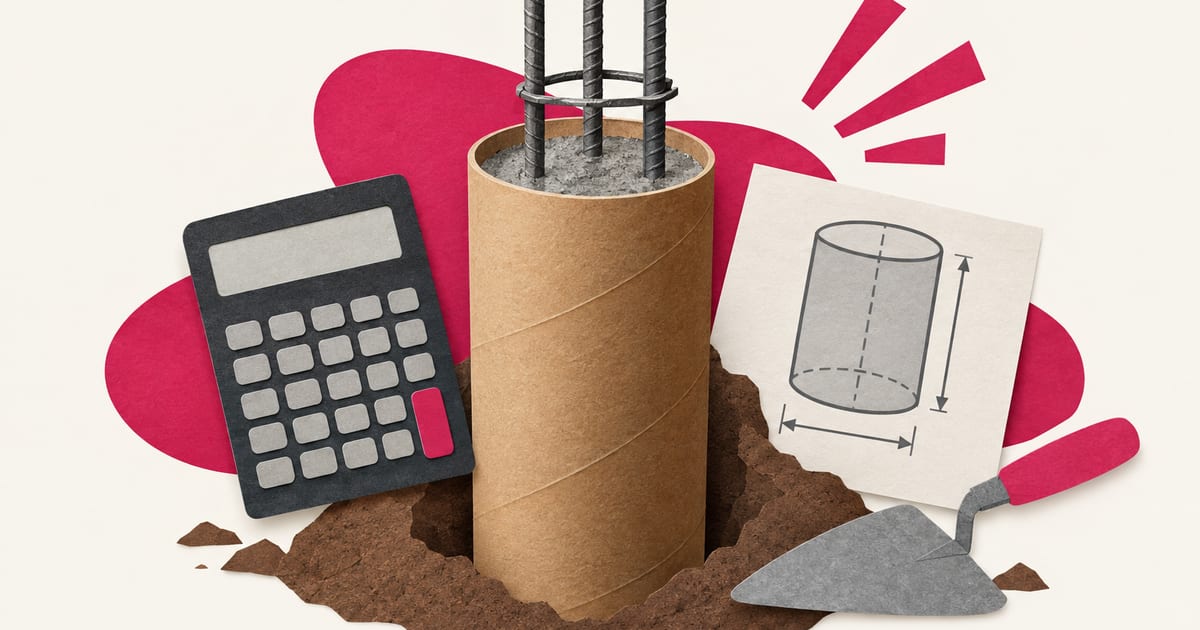
A sonotube concrete calculator turns a tube form's diameter and height into the volume of concrete you need, then helps you convert that volume into bags or a ready-mix order. It is not a substitute for a soil or footing design, but it removes the arithmetic guesswork that leads to short pours or leftover bags. Use it whenever you are filling disposable tube forms for deck posts, fence posts, lamp posts, or small piers.
What a Sonotube Concrete Calculator Actually Solves
A tube form is a cylinder, so the core math is simple: volume equals pi times radius squared times height. A sonotube concrete calculator handles unit conversions, multiplies by the number of tubes, and applies a waste allowance. Some tools also estimate bag counts, though bag yield changes with bag size and mix, so always check the product label.
It does not tell you how deep a footing must be, what diameter your structure needs, or whether your soil can carry the load. Those are design questions. The tool answers a narrower question: how much concrete goes into these tubes? The result is only the concrete volume; it does not include the tube, rebar, anchor bolts, or concrete lost to a messy pour.
When to Use It
Reach for the calculator when the pour is made up of round tube forms. Typical jobs include deck and porch footings, fence and gate posts, mailbox posts, lamp posts, small sign posts, and isolated piers. It also works for a group of tubes of the same size; for mixed sizes, calculate each size separately and add the results.
Do not use a tube-form estimate for a slab, wall, or complex foundation. Those shapes need a slab or foundation calculator. If your plan includes a widened base or bell at the bottom of the pier, calculate that base separately and add it to the tube volume. If the tube sits in an oversized hole, the tube volume is still the concrete inside the tube; the hole backfill is a separate material. The calculator is also handy for checking a supplier's quote: if the ticket says a quantity far above your calculated volume, ask why before you accept it.
How to use a sonotube concrete calculator step by step
1. Measure the actual tube diameter
Use the inside diameter marked on the tube or measure across the inside with a tape. Tube sizes are often called by nominal names, and the actual inside diameter can differ. Measure every size you plan to use rather than assuming all tubes on site match.
2. Measure the pour height
Measure from the bottom of the tube—or the bottom of the excavation if the tube will be filled below grade—to the top of the finished concrete. If the tube sticks up above grade, include the portion you will fill. Mark the height on the tube so the crew fills to the same level.
3. Convert to consistent units
Pick feet or inches and stay there. In feet, radius is half the diameter in feet. The formula is:
Volume per tube (cubic feet) = 3.1416 × radius² × height
If you measure in inches, convert diameter and height to feet before calculating, or use the calculator's unit selector.
4. Multiply by the number of tubes
Calculate one tube, then multiply by the count. For a quick check, a tube with a 12-inch inside diameter that is 4 feet tall has a radius of 0.5 feet, so the volume is about 3.14 cubic feet. Six of those tubes come to about 18.8 cubic feet before waste.
5. Add a waste allowance
Add a small percentage for spillage, uneven excavation, and overfill. Five to ten percent is a common range for small jobs, but the right number depends on site conditions and how carefully the forms are set. Use the calculator's waste field rather than doing the percentage in your head.
6. Convert volume to bags or ready-mix
If you are mixing bags, divide total cubic feet by the yield printed on the bag. As an example only, if a bag yields 0.6 cubic feet, 18.8 cubic feet needs about 31.4 bags before waste. With a ten percent allowance, that is about 35 bags. Check your own bag label—yield varies by bag size and mix. For a faster bag check, the concrete calculator bag page walks through the conversion.
For a ready-mix order, give the supplier the total cubic yards. Divide cubic feet by 27. Confirm the minimum order and delivery window with the plant; small tube jobs often fall below the practical minimum for a truck. Ask whether the plant charges a short-load fee or minimum; that is a cost question, not a volume question.
Common Mistakes That Throw Off the Estimate
- Using diameter as radius. This quadruples the volume. Halve the diameter first.
- Mixing inches and feet. Convert once, at the start.
- Using nominal tube size without checking the actual inside diameter.
- Forgetting the below-grade portion of the pour.
- Calculating the tube but ignoring a widened base, bell, or separate footing.
- Using a bag yield from a different bag size or mix.
- Skipping waste, then running short on the last tube.
- Ordering bags for a large job when ready-mix is more practical.
A sonotube concrete calculator is only as good as the measurements you feed it. Measure twice, write the numbers down, and keep the same units throughout.
A Worked Example With Multiple Tubes
Suppose you have eight tubes, each 10 inches in diameter and 3 feet tall. Convert 10 inches to 0.833 feet. Radius is 0.417 feet. Volume per tube is 3.1416 × 0.417² × 3, which is about 1.64 cubic feet. Eight tubes give about 13.1 cubic feet. Add ten percent waste and you need about 14.4 cubic feet. Divide by 27 to get about 0.53 cubic yards.
If you are pricing the pour, run the volume through the concrete costs calculator after you have the quantity. For a foundation that combines tubes with a slab or grade beam, use the concrete foundations calculator for the other shapes and add the totals.
Check Before You Pour
Confirm the tube diameter and height against the plan, check that the tubes are plumb and braced, and verify the bag yield or ready-mix quantity with the supplier. If the tubes are inspected, have the hole depth and diameter checked before concrete arrives. Keep a small buffer for uneven subgrade, but do not turn a small buffer into a huge overorder—concrete is rarely returnable once it is on site. If the tubes are in a wet hole, account for water that must be pumped or displaced; do not pour into standing water unless the mix and conditions allow it.
Run the sonotube concrete calculator once with your final measurements, write the result on the plan, and compare it with the bag count or delivery ticket before you commit. That last check is the difference between a smooth pour and a scramble for extra bags.
FAQ
Do you measure a Sonotube by inside or outside diameter?
Measure the inside diameter. That is the space the concrete fills. The name on the tube is often a nominal size, and the actual inside diameter can differ, so check the label or run a tape across the opening. Using the outside diameter will overstate the volume, sometimes by a lot.
How do I turn tube volume into bags of concrete?
Find total cubic feet from the calculator, then divide by the yield printed on the bag. Bag yield changes with bag size and mix, so use the number on your own bag, not a guess. Round up to whole bags and add your waste allowance. For small jobs, buy one spare bag if storage allows rather than running short mid-pour.
Should I add waste to a tube concrete estimate?
Yes, a small allowance is sensible. Spillage, uneven excavation, overfill, and slight differences between tubes can eat into a tight estimate. Five to ten percent is a common starting range for small jobs, but adjust for site conditions. If you are ordering ready-mix, confirm the plant's minimum quantity so your waste allowance does not push you into a costly short load.
Does the calculator include the widened base under a tube?
Usually no. A tube-form calculator estimates the cylinder inside the tube. If the design has a bell, pad, or widened footing at the bottom, calculate that shape separately and add the volumes. For combined foundations, use a foundation or slab calculator for the other parts, then add the tube total. Check the plan before you order.